Category Archives: Home

Augusta

Sandy hair coiled coral, combing the marine; a tangled frenzy.

Barren breath like glitzy moth wings, quivering a thousand beats.

Red-raw meat humours a famished mouth,

Gone astray, hailed in the wild.


Tagged , , , , , , , , , , , , ,

Hush

Words strangle my throat; I try

Three thousand ways to

Come crawling to your bare feet

Tagged , , , , , , , , , ,

Book Review – The Hobbit, by J.R.R. Tolkien

Hello Readers,

I have decided to add the reviews that I write on Goodreads.com to my blog. I think it will be a great way to keep my blog more active!

Today, I finished reading The Hobbit, by J.R.R. Tolkien. It was a completely new genre for me, and I was thoroughly immersed throughout. Here is my short review;
‘In a world of uneasy and troubled times, it is more than a pleasure to escape into the fantasy world of ‘The Hobbit’. This book escorted me from the train (my real setting during most of the reading) into the wonderful and magical world of mountains, woods, rivers and caves. The settings were immaculately designed, and the characters were fully rounded, lovable and intriguing, which are assets that make a reader always remember them. This is a truly exceptional novel, and a remarkable piece of art – no wonder it was adapted into movies (all of which are next on my list!)’

Lastly, I must say, that Friday is my favourite day in which to finish reading a book. I shall definitely be looking forward to Monday, if only for the chance to meet some new characters and follow a new journey!

Until next time 🙂

Donna x


Tagged , , , ,

My 2015 Reading List!

Hello Readers,

I have finally researched and compiled my 2015 Reading List!

There is a total of 150 books on the list; which I doubt very much I will be able to complete in 2015 – but at least it will act as a guide – and for those that I do not get round to reading, they can always be added to my 2016 reading list!

I am going to attempt a different reading approach this year. I generally read at a medium speed, and by doing this I am averaging around 15 books a year. So it is time to speed up and do some scan reading in the places in a book that I see fit! Places like action scenes and scenes that tend to drag on in description will be great places to start. I also have a habit of re-reading certain paragraphs or scenes that are written beautifully or tend to take my breath away, and although this is ‘nice’, I must remember that this is taking away the time that could be spent on other books. If I were to do this even a few times on every book then the time certainly accumulates.

On the list, I have included Classics, Biographies, Teach yourself books, Poetry and a wide range of fiction genres, plus some real-life stories thrown in for good measure! This year I needed include other books that are away from the usual genre areas with which I am familiar. I think that by expanding my literary horizons, I will be colouring my experience as a writer.

Here is the list. I hope you enjoy!

Book Author
The Red House Mystery A.A. Milne
Naked, Drunk and Writing Adair Lara
Hausfrau: A Novel Jill Alexander Essbaum
The Unfortunate Importance of Beauty Amanda Filipacchi
All Fur Coat Andrew Holmes
The Last Days of Rabbit Hayes Anna McPartlin
Bird by Bird: Some Instructions on Writing and Life Anne Lamott
The Hound of the Baskervilles Arthur Conan Doyle
From A to Biba: The Autobiography of Barbara Hulanicki Barbara Hulanicki
West End Girls: The Real Lives, Loves and Friendships of 1940s Soho and its Working Girls Barbara Tate
Bare Necessity (Original Title: A Compromising Position) Carole Matthews
The Little Old Lady Who Broke all the Rules Catharina Ingelman-Sundberg
Love, Rosie (Original Title: Where Rainbow’s End) Cecelia Ahern
Great Expectations Charles Dickens
David Copperfield Charles Dickens
Jane Eyre Charlotte Bronte
Never Knowing Chevy Stevens
The Double Bind Chris Bohjalian
The Orphan Christopher Ransom
The Book of You Claire Kendal
Never Tell Claire Seeber
Brooklyn Colm Toibin
Gods and Kings: The Rise and Fall of Alexander McQueen and John Galliano Dana Thomas
Robinson Crusoe Daniel Defoe
Rebecca Daphne du Maurier
Life Expectancy Dean Koontz
Innocence Dean Koontz
The Unloved Deborah Levy
Swimming Home Deborah Levy
Writing From the Inside Out: Transforming Your Psychological Blocks to Release the Writer Within Dennis Palumbo
The Zookeeper’s Wife Diane Ackerman
My Little Friend Donna Tartt
The Goldfinch Donna Tartt
Teach Yourself: Understanding Psychology Dr. Nicky Hayes
The Power of Now Eckhart Tolle
The Raven Edgar Allan Poe
The House of Mirth Edith Whalton
After Birth Elisa Albert
Escaping Into the Open: The Art of Writing True Elizabeth Berg
Wuthering Heights Emily Bronte
Room Emma Donoghue
Elizabeth’s Missing Emma Healey
Men Without Women Ernest Hemingway
Scoop Evelyn Waugh
Middlemarch George Eliot
1984 George Orwell
Animal Farm George Orwell
Life: A User’s Manual George Perec
Gone Girl Gillian Flynn
Dark Places Gillian Flynn
The War of the Worlds H.G.Wells
The Time Machine H.G.Wells
A Little Life Hanya Yanagihara
The People in the Tree’s Hanya Yanagihara
Alys, Always Harriet Lane
Put Your Heart on the Paper: Staying Connected In A Loose-Ends World Henriette Klauser
Moby Dick Herman Melville
The Black Book Ian Rankin
The Hobbit J.R.R.Tolkien
The Call of the Wild Jack London
The Poser Jacob Rubin
Ulysses James Joyce
Write Great Fiction: Revision and Self-editing James Scott Bell
Pride and Prejudice Jane Austen
Emma Jane Austen
Daughter Jane Shemilt
Take Joy: A Book for Writers Jane Yolen
The Catcher in the Rye JD Salinger
Into the Forest Jean Hegland
The Glass Castle Jeanette Walls
Three Men in a Boat Jerome K. Jerome
The Executor Jesse Kellerman
The Miniaturist Jessie Burton
Blue-Eyed Boy Joanne Harris
A Kind of Intimacy John Ashworth
The Most Beautiful Walk in the World: A Pedestrian in Paris John Baxter
On Becoming a Novelist John C Gardner
The Art of Fiction: Notes on Craft for Young Writer’s John Gardner
The Wild Life: A Year of Living on Wild Food John Lewis-Stempel
Of Mice and Men John Steinbeck
Gulliver’s Travels Jonathan Swift
Heart of Darkness Joseph Conrad
Songbird Josephine Cox
The Artist’s Way Julia Cameron
Chanel – The Legend and the Life Justine Picardie
Teach Yourself: Get Your Book Published Katherine Lapworth
The Buried Giant Kazuo Ishiguro
Get in Trouble; Stories Kelly Link
The Wind in the Willows Kenneth Grahame
The Kite Runner Khaled Hosseini
Find Me Laura Van Den Berg
Anna Karenina Leo Tolstoy
Leonard Cohen: Poems 1956-1968 Leonard Cohen
Alice’s Adventures in Wonderland Lewis Carroll
Little Women Louisa May Alcott
Apple Tree Yard Louise Doughty
The Dice Man Luke Rhinehart
The Handmaid’s Tale Margaret Atwood
Gone With the Wind Margaret Mitchell
Improve your Written English Marion Field
The Adventures of Huckleberry Finn Mark Twain
London Fields Martin Amis
Runaway Martina Cole
Quant by Quant: The Autobiography Mary Quant
Frankenstein Mary Shelley
The Scold’s Bride Minette Walters
Brick Lane Monica Ali
Writing Down the Bones Natalie Goldberg
The Scarlett Letter Nathaniel Hawthorne
Staying Alive: Real Poems for Unreal Times Neil Astley
Trigger Warning: Short Fictions and Disturbances Neil Gaiman
Land of the Living Nicci French
The Picture of Dorian Gray Oscar Wilde
The Price of Salt Patricia Highsmith
Amnesia Peter Carey
Want You Dead Peter James
The Courage to Write: How Writer’s Transcend Fear Ralph Keyes
Miss Peregrine’s Home for Peculiar Children Ransom Riggs
Zen in the Art of Writing Ray Bradbury
The Big Sleep Raymond Chandler
Don’t Sweat the Small Stuff Richard Carlson
Dr Jekyll and Mr Hyde and other Short Stories Robert Louis Stevenson
Story; Substance, Structure, Style, and the Principles of Screenwriting Robert McKee
Why we Run: A Story of Obsession Robin Harvie
Serena Ron Rash
Revolution Russell Brand
Clarissa Samuel Richardson
Pride and Prejudice and Zombies Seth Grahame-Smith
Trafficked Sophie Hayes
The Host Stephanie Meyer
Everything’s Eventual Stephen King
The Stand Stephen King
The Shining Stephen King
The Bell Jar Sylvia Plath
Dying for Christmas Tammy Cohen
Finding Your Writer’s Voice: A Guide to Creative Fiction Thaisa Frank
Tess of the D’Urbervilles Thomas Hardy
Jude the Obscure Thomas Hardy
The Murder Bag Tony Parsons
Steering the Craft: Exercises and Discussions on Story Writing for the Lone Navigator or the Mutinous Crew Ursula K. Le Guin
The Hunchback of Notre Dame Victor Hugo
Les Miserables Victor Hugo
Mrs Dalloway Virginia Woolfe
Lolita Vladimir Nabokov
Novel Shortcuts – Ten Techniques That Ensure a Great First Draft Whitcomb
The Woman in White Wilkie Collins
The Moonstone Wilkie Collins
Lord of the Flies William Golding
The Elements of Style William Strunk Jr and E.B. White
The Writer’s Digest Handbook of Novel Writing Writer’s Digest
Tagged , , , , , , , ,

Seasons Greetings!

Hello Readers,

Firstly, I’d like to wish you all a Merry Christmas!

It has been pretty mild weather here in London (UK) with Christmas morning having been made up of clear blue sky and a blazing sun. But the weather forecast predicts a cold spell ahead, so I am hoping we might see some snow before the new year.

It has been a wondrous, inspirational year for writing and reading, and I hope you have also experienced the same.

Here is a list of 15 books that I managed to read in 2014, with reviews that I made on Goodreads.

I will post again in the new year,with my new 2015 reading list; as well as catch up with you all 🙂

Delilah by Eleanor De Jong

I loved this book! Eleanor writes with such brevity, creating colourful characters in a beautiful setting. I usually read horror and thriller novels, but for me this was so refreshing, and a wonderful insight into the Israelite and Philistine worlds – and of course human nature. This book is a fine example of great storytelling.

Revolutionary Road by Richard Yates

Revolutionary Road is a literary masterpiece. All of the elements of novel writing are tightly woven together to perfection. The setting is a character in itself; adding both atmosphere and emotional boom to the story. Yates is masterful with his use of metaphors, and he cleverly works humour into the reader without distracting them from the plot – and the humour acted as a light release from the overall moodiness of the themes. Having watched the film first, I visualized Winslet and DiCaprio as being the main characters throughout reading the book – and this, for me, coloured the story tremendously – because these two actors had the exact same chemistry as the characters in the book. This is an addictive read with lovable characters – you just fall into their hearts and live their stories with them. This novel will stay with me forever! 5/5

The Book of Tomorrow by Cecelia Ahern

The magic and mystery of the blurb on the back of the book grabbed me straight away. I loved the protagonist, minor characters and setting. The plot had me guessing all the way through – I was eager to know the answers. This is the first book I have read by Cecilia Aherne, and I was not disappointed; she weaves a fine plot and satisfying story. If you like magical stories then I recommend this book.

A Streetcar Named Desire by Tennessee Williams

This is an ace play! Tennessee writes a beautiful setting; he transports us right into the era with his description of skies, music, and street dialogue. You can almost smell the roasted chestnuts cooking! Tennessee must have had a strong love of poetry, for it comes out full bloom in Blanche’s dialogue. This is a flowery play with dark undertones, that all lead to a heartbreaking climax. A masterpiece that I will definitely read again!

Write by The Guardian

This was quite an addictive and enjoyable read! I am always intrigued by the ‘how to write’ books; but this one even more so because it was full of good advice from fine writers. I have taken away some good tips from this book for when I start work on the second draft of my novel. I recommend this book – it is short and snappy and you can digest it all in a day or two.

Ten New Poets by Bernardine Evaristo

A beautiful collection of poetry about the universal elements of life. The book contains a short biography of each poet, a selection of their poems, and a brief explanation of each reflecting on style and theme. A truly inspiring read.

102 Ways to Write a Novel: Indispensable Advice for the Writer of Fiction by Alex Quick

An essential book for novelists! In just 102 sections, this book manages to address and answer all of the important elements that are needed to write a successful novel. The book is written with much brevity, something that most other books in this subject often fail to do. The 102 steps can be dipped into time and time again as you work through your novel. It is a great guide for ensuring that you are including everything that you need to in order to create that bestseller! Go buy!

Joyland by Stephen King

Joyland takes you into the world of a 1970’s amusement park – with murder, supernatural and coming-of-age elements all thrown in to one super story. A thrilling ride!

The Shadow of the Wind by Carlos Ruiz Zafon

The first few pages of this book were gripping and I was excited by the plot. However as I read on, I grew bored, for two reasons. 1) The author creates new characters as we reach the middle of the book. According to novel writing, all characters should be well and truly established before we get to the middle. 2) The author over-explained things and I found that this slowed the plot. All I wanted was a story – not a poem. Over all, I was not gripped by this book. There is no doubt that the author can write beautifully, but he didn’t quite grip me with his story telling. In the end I skipped to the last chapter and got my friend to fill me in with anything that I had missed.

Atonement by Ian McEwan

This book starts out with a ‘play’ scene that reminded me of the beginning of Revolutionary Road. This process of placing the characters straight into a point of action such as a play, is so powerful in novel writing. From the outset, Ian manages to pull you right into the main character’s (Briony) mind – so by the end of the book, you feel like you have lived her life and made a lifetime friend. This book is not just a book of fiction, it is a book of psychology. It demonstrates some of the deepest and darkest elements of humanity, and Ian lights them up on the page. A truly stunning book by a masterful writer. The film was stunning too.

Single White Female by John Lutz

This is psychological thriller perfection! A great cast of characters, a lovely weaved plot, and lots of mystery and suspense. The pages kept turning right until the end. I loved Allie and Hedra and the entire doppelganger concept. John takes this element of humanity that exists in us all, in small amounts, and then magnifies them into a form of madness. I love the film also, but the book has different scenes which added even more spice when reading. This book/film will always get five star rating from me.

The Evil Seed by Joanne Harris

I have mixed feelings about this book. The premise and the characters were very captivating, and I especially loved the Cambridge setting and the dark, other-worldly themes, however, I felt that the book was confusing in places, for two specific reasons. Firstly, I struggled to determine from the outset, which characters were narrating the different chapters in the book. Secondly, I was distracted from the plot because of the long sections of flowery description. Don’t get me wrong, the description was gorgeous and it added to the feel of the book, but for me it caused distraction – all I wanted was the story. There is a lot to be said for simplicity in writing! All that aside, this is an excellent debut novel from Joanne. She is an expert storyteller who managed to weave a complicated plot and tie it neatly at the end. For me, her skill definitely lies in artistic descriptive writing. If you love art, symbolism and atmospheric writing, then this book is for you.

One Door Away from Heaven by Dean Koontz

This book is the first Dean Koontz book I’ve read. It is a whopping 757 pages of pure excellence! Dean creates a cast of beautifully named, well-painted, rounded characters, and we are drawn into their minds so fantastically. With them, we embark on a huge adventure that is full of atmosphere, suspense, danger and fear. And Dean certainly knows where to place those cliff-hangers, because I was turning those pages as fast as that Fleetwood on the highway! Dean writes some interesting views on bioethics and humanity, through the perspectives of his characters – and this book keeps you thinking about your own existence and place in this vast universe long after you have finished. If you love metaphors and similes then Dean is your writer; occasionally I had to re-read his descriptions because they blew me away. Dean is a superb writer and I am left wanting to read more of his books.

The Great Gatsby by F. Scott Fitzgerald

Being an avid horror/thriller reader, this book was something a little different for me to try. I found the plot intriguing, but I felt that the characters were portrayed from a far distance; we rarely get to know their feelings, or what prompts them into their actions, which I found rather disappointing. I felt the writing had a screenwriting quality to it, and it very much reminded me of books like ‘A Streetcar named Desire’ – may be because of the quantity of dialogue throughout the book. There is no doubting that Fitzgerald has a beautiful hand in writing, and there is some magical descriptive writing in this book that bring you right into the elegance of the era, in which this book is set.

Katherine Mansfield Short Stories

These short stories are excellent! They deliver everything they need to with regards to all of the short story elements, yet they breathe brevity. We are immediately introduced to the character, and we live out the plot through the character thought and feeling. I particularly liked ‘The Tiredness of Rosabel’ and it’s theme of loneliness and darkness in an every day situation. Katherine manages to pull the darkness of life into most of her stories, and this is really my cup of tea! I truly recommend this to any reader who likes a quick reading fix. Also, any short story writer who wants to study the art of short story telling, then this book is a must!


Tagged , , , , , , , ,

Wishing you all a frightful evening…

Hello Readers,

Well the sun is setting and the moon is brightening, on this still and autumnal Halloween in London.

I cannot think of a better day than to send out a big THANK YOU to all of my readers and followers; for their support and their likes on my blog. You all give me the encouragement to continue writing and blogging. From today, I am going to make a promise to visit and support every blog that supports mine.

So what have I been up to in the world of literature, of late?

150 Word free-writes…

I have been spending my early-morning commutes undertaking 150 word free-writes. I start the process by searching for a random image on Google and studying it for a few minutes. Then I visualise the image as I write, conjuring up whatever words and sentences come to mind. The trick to this process is to write without stopping, and to allow the mind to run wild like water. Sometimes the final piece naturally turns into a piece of prose, a poem, a character biography, a descriptive setting or a flash fiction; and the excitement lay’s in the unpredictable outcome. So why am I doing this? Well, it keeps me writing and achieving every day, which is great practice, but my ultimate goal is to create a portfolio of 150 word pieces that I can re-work into a collection of prose and poetry – which I aim to send out to publishers when dusted and polished.

Nano-Wrimo…

I have been working on the first assignment towards my Diploma in Novel Writing, which, if I am honest, has taken me too many months! But I am almost finished! The task was to create an outline of a plot, for a novel, to include all of the basic elements of novel writing. I will be submitting the assignment to the college very shortly; but I won’t be putting the plot to waste. I have decided to use it as inspiration for November 2014, 30 day Nano Wrimo (National Novel Writing Month) challenge; which starts tomorrow. I had better sharpen my pencil. I am not sure what to expect of this write, but I am going to follow the free-write process, let my imagination run wild and let the story lead. I am extremely excited to get started!

My Debut Novel…

Earlier this year I undertook the Camp Nano Wrimo ‘50,000 words in 30 days’ writing challenge. These 50,000 words became the first draft of my debut novel – a psychological thriller/horror – a story that has been growing in my mind for many years. After completing the 50,000 words, I tucked it away in a draw for several months (a bit longer than Stephen King’s recommendation of several weeks). However, this weekend, I plan to dust off the 70x A4 pages, dissect the daily writes, and place them in chapter/plot order. As you may have guessed by now, I free-write most of the time, and tend not to write in any particular order.

Reading…

I am currently a third of the way through a terrific thriller/horror novel called ‘One Door Away from Heaven’ by Dean Koontz. The novel is a great setting for this time of year; it’s dark and uneasy plot coincides nicely with glowing candle-nights. I have read 12 novels this year, which is less than the 22 books I had predicted on New Year’s Eve. However, I need to accept that some novels are a slower and longer read – and that I just need to take my time and enjoy the process. I have set myself a new goal of reading at least two chapters of a novel every day – and follow the concept that smaller steps lead to big achievements.

Well that’s it readers. I hope you have enjoyed this post and it has inspired you to continue with your projects.

Have a fantastic Halloween weekend!

Donna x

Tagged , , , , , , , , , , , , , ,

Ralf

I take a turn, my feet pace

To a double beat

Down dreary street

I’m clipped of all good fortune

My lip is blue, broken

From the devil’s punch

Blood-winced, I wail,

Like a big-mouthed lion with a repressed paw

I take a turn, my head raw

Up to my latched room

Where I subsist

In pallor


©2014.alittlebirdtweets.

Tagged , , , , , , , , , , , , , , , , , , , ,

Daydream

Street lamps reflect in puddles

September sadness –

Alone in a street cafe

Tagged , , , , , , , , ,

Camp NaNoWriMo Winner 2014

Hello Readers,

I am a Camp NaNoWriMo April 2014 winner!

I achieved 50,709 words in 28 days, for the first draft of my first novel. The two extra days that I had left over, gave me the chance to format my writing into Microsoft Word, and put it through spelling and grammar checks.

I wrote scenes and chapters every day on my commute to work in Central London (which is one hour and fifteen minutes each way), using my Samsung Smart phone and a wonderful little app called Power Writer! I copied and pasted all of the writings into email, and then copied and pasted them from email into Microsoft Word. It was wonderful to see the number of pages in Microsoft Word build to 70. My novel looks like it is coming to life!

2014-Winner-Facebook-Profile

What next?

I shall be putting my wondrous first draft in a drawer for a few weeks (Stephen King’s advice in his memoir, On Writing). Then I intend to take it out and look at it with fresh eyes.

In the meantime…

I am looking to purchase the writing software ‘Scrivener’ . At this point in my novel, I feel that I need something to help me piece the scenes and chapters together into my intended outline (I was writing scenes and chapters every day in no particular plot order – which was more of an exciting process for me!). Scrivener enables a writer to arrange their thoughts, notes, ideas and research into cork-board format- and this can stir up new plot ideas and twists which you may have never had before.

Analysing and Studying…

Whilst my novel sits in a drawer, I am going to take some time to analyse and study some bestselling novels. As I read, I am going to  ask myself ‘Why has the writer chosen to write that particular sentence, scene, chapter? How does it move the plot forward?’ May be this will spark some new approaches to my own novel.

Rickmansworth Writer’s Group…

Today, I am attending the Rickmansworth Writer’s Group. I didn’t get a chance to write up the last meetings notes as I was so busy; but hopefully in the next two weeks I’ll be able to conjure up something inspirational about the world of writing.

Have a wondrous weekend!

Donna x

Tagged , , , , , , , , , , , , , ,

Camp NaNoWriMo – April 2014

Hello Readers,

Hot news! I am a participant in Camp NaNoWriMo April 2014!

In April, I will be writing the first draft of my debut novel (a psychological thriller/horror), and Camp NaNoWriMo is going to be my retreat in achieving this. In Camp NaNoWriMo I am a member of a cabin of twelve writers, all wanting to achieve a long-length piece of written material. Every day we will add our word counts onto the website, discuss our achievements and problems, and help keep each other motivated to the end of the month.

This is my first attempt at a written piece this length, and so I have set what I believe to be a workable goal.

1667 words per day = total of 50,000 words in 30 Days

You can keep track of my word count on my Facebook page.

Wish me luck!

Tagged , , , , , , , , , , , , , , , ,

The Rickmansworth Writer’s Group

Hello Readers,

I attended the Rickmansworth Writers Group for the second time on 2nd March 2014.

As usual, the group organiser Mike Loveday (a published writer who teaches writing to adults in community settings) set out a mini agenda for the three hour session, which included;

  • A 10 minute writing exercise (taking inspiration from a set of scenarios all based on dialogue).
  • The reading-sharing-critiquing of written works by members of the group.

 A 10 minute writing exercise…

The first task on the agenda had been a ten minute ‘warm-up’ writing exercise, taking inspiration from a set of scenarios based on dialogue – as listed below. These were adapted (by Mike) from Zoe Fairburns, Write Short Stories – and Get Them Published (Hodder Education, 2011).

Scenarios:

1. Write a conversation between two people, with a character whose way of countering loneliness is phoning up a call centre and engaging the listener in conversation.

2. Write a conversation between yourself now and when you were half your current age. Be aware of how language and attitude differs.

3. Write the final conversation between two people (end of business arrangement, a friendship, a romance?). Let their feelings show.

4. The “cold call”: One person is trying to persuade another person. (Doesn’t have to be selling a consumer product). The pair have never met before. Write their dialogue.

5. Write a conversation between a carer and a person being cared for. Make use of (subtle or unsubtle) conflict and tension.

The goal had been to produce a free write narrative, a poem, a flash fiction, a short story – or any other literary form that had inspired us at that moment.  I had chosen scenario number 1.

I had created a screenplay / dialogue piece / telephone conversation between two characters. Here is ‘Phone Call’ – which was edited following the writing meeting.

—–

Phone Call

The phone rings. The call centre guy reads an outside line on the display. He thinks it is unusual that a member of the public has managed to get through to his line directly. Telephone numbers were never advertised, and all outbound calls were marked ‘unknown’ – so that customers were unable to return calls. He picks up the receiver.

– Hello. C… c… c… can I speak with Alan Davison please?

– Hello. This is Alan Davison speaking. May I ask who is calling please?

– Not just yet. I do have a good reason to call you. I called to tell you that I am lonely.  I have been lonely for years – I know you are the person to wash my loneliness away.

– I’m sorry Sir, but we are unable to provide professional support. We sell car insurance. Can I suggest you call the Samaritans?

– The Samaritans cannot help me like you can, Alan.

– Excuse me? Who is this speaking?

– It’s your b… b…brother. Luke. I guess you were never told about me, right?

– Sorry Sir, I think you may have the wrong number?

– I know this is a shock. I know you will never believe my words over the telephone – how about we meet?

– I don’t think that is a good idea, Sir. Is there anything else we can help you with today?

– Yes. Meet me tomorrow morning, outside your work building. Say, eleven?

– I’m afraid that won’t be possible Sir.

– Then if you are unwilling to cooperate, I suggest you look me up on Facebook to prove the situation.

– How will that prove anything?

– Because we are identical twins.

End

—–

Following the ten minute exercise, we were given a worksheet detailing what can be shown through dialogue. This was adapted (by Mike) from Zoe Fairburns, Write Short Stories – and Get Them Published (Hodder Education, 2011).

 How to Write Effective Dialogue

 Using Direct Dialogue:

  • In a story, direct speech benefits from fizz, sparkle, movement and a sense of “conflict” between people.
  • Aim to make it obvious who is speaking from the dialogue itself, so the reader / listener doesn’t become confused. Otherwise best to use “he said” or “she said”.
  • Good to practice to avoid resorting to melodramatic speech verbs to make the dialogue seem more interesting e.g. “he exclaimed”. A better technique is to put the drama into the dialogue itself.
  • Similarly, good practice to avoid relying on explanatory adverbs – “he said shyly”. Let the words speak for themselves.
  • In real life people often rely on stock phrases, repeat words, talk in circles – you can make use of this, but in a story you can do so more sparingly (rather than wear out a reader’s / listener’s patience and interest).

What you can show through dialogue:

  • Relationships between people – Affection or insult. Formal or Informal. Tact or Aggression. Condescension or Respect.
  • Origins – National, regional, class differences (avoid stereotypes though).
  • Age – 7, 17, 47, 87 year olds all speak differently. Teenage slang words vs. old-fashioned terms. More limited or richer vocabulary. Rambling vs. speed of communication.
  • Attitude to “conversation” – Interrupters, sentence finishers, contradictors, ignorers, avoiders, or people who turn the topic of conversation back to themselves.
  • Attitude to “self” – Trailing off and not finishing sentences. Checking with the listener that they agree – “do you know what I mean”.
  • “Obsessions” – Using repeated phrases, recycling favourite topics. Obsessions can be significant or mild.
  • “Lies” – Evading answers Exaggerating. Excluding information. Providing excess, unconvincing detail.

In addition to discussing the points on the worksheet, the group also covered other aspects on the subject of dialogue.

  • Pacing – how shorter speech can speed up a piece of writing; and longer speech can slow down the pace of writing – all depending on the effect the writer wants to create.
  • Overheard conversations – one member of the group had recommended using a notebook to capture snippets of conversation. I informed the group that lyricist Michael Stipe (of music band, R.E.M) undertook this practice regularly for his song writing – and that many snippets can be heard in the lyrics of their songs and in the title of the band’s albums. Automatic for the People was apparently a phrase that Michael overheard in a restaurant – when the waiter had advised customers that food was ‘automatic for the people’ (as in self service).
  • One character completing another character sentence for them – how often do we struggle to find the last word we want to use in a sentence – and in the time it has taken to think of the word, someone else has found it for us? I know I do this quite often – especially so on tired days when my brain is still in sleep-mode.
  • Action and setting – rather than have your characters just talk it out, have them continue with their actions and task – have them move around – let them connect with their environment. Remember, nothing is still in drama – even if the character is seated at a table – he is bound to be flicking a cigarette, swirling a cup of coffee or yawning.

The reading-sharing-critiquing of our own written work…

My flash fiction ‘Freedom’ was critiqued by the group. The reaction to this story was mixed; some having loved it to the point of wanting to pin it on their wall, while some curled away from it due to its minor horror / dark / pain content. This led me to think about the horror genre and how people can feel and react to it so differently.

Before I dig deeper into the discussion that took place, I will start by adding, that I wrote this piece after a very tired day at work. It was one of those days when my body and mind was exhausted, yet was also in a kind of thoughtful and reflective state. I had arrived home and questioned life and it’s routine – I’d asked myself ‘was there really any escape and ultimate freedom in this life, from work, from repeated pattern?’ Now, please don’t get me wrong, I love life and I love my routine, but on that particular day I was completely worn-out and thinking how nice it would be to stay in a position of freedom forever. And so I decided to allow all of these emotions evolve into a story.

Read the story Freedom

When the group began to discuss the story, the first word that came up was ‘pain’. One writer seemed to recoil at the idea of pain and blood, and the need to have to experience this to achieve her ultimate freedom. Another writer explained that he did not think the themes were horrific in the slightest – that we are all born into this world in pain, with blood – and that the themes are a normal part of our existence.

Another writer also saw it is a ‘watch what you wish for’ – which was quite an interesting take on the plot. This raised thoughts like ‘maybe we should all be happy and content our lives. May be the ‘wanting more’ is ultimately what causes us unhappiness – that it is about living in the now and not the past or future.’

It was very interesting to see the in-depth take on themes of the story – because originally, to me, the story was one that that had only expressed ‘escape’ – nothing else.

Some writers found the story Kafka-like and dreamlike – the fact that everything the character experiences does not possess full evidence of it actually happening– for instance, the writing just appears on the mirror – she does not see anyone or anything write it. This questioned the reliability of the story and the integrity of the characters mind.

franz-kafka

A writer had also mentioned the actual structure of the story. He liked how the story was split into two parts – the first part, the beginning, is where we live the characters’ dreams – and the second part, the ending, is where the dreams are played out and we experience them with her. This also led on to specific word-use in the story. Words such as ‘scrawled’ had a menacing, insidious feel – adding to the horror of the story. Some writers had mentioned the symbolism in the story – that bathing was a means to cleanse the soul – the perfect setting for the ultimate cleansing of her life.

I finished the discussion by informing them of an ending that I decided not to add the story – mainly because I wanted the reader to interpret it and end it in their own way. But for me, in my world, I pictured the character breaking the glass of the window, flying out towards her faraway land –  wherever that was, and ultimately achieving her escape.’

The next piece of work to be critiqued was a poem written by another writer. The title was called ‘Critique for the Day’. This had a fairy-tale quality and structure, which was nicely fused with darker words and themes of the piece. The writer had confessed after the discussion, that is was an autobiographical piece that came to be written because he always found himself concerned with his own thoughts – and how much they could be portrayed by others if he were to share them. A comment was made by another writer (before the writer confessed) that we ‘all assume the protagonist was human – when it could have in fact been about an ice-cube or an insect.’ There was nothing to assume the subject was human actually – and so this thought led me into thinking about the wonderful world of animation.

The last critique was on a poem – a selection of observations that all occurred to people at the same moment in time – lunchtime. I had commented on the humour which mostly occurred in the habits of the characters during their meal break. It made me think about comedy and how humour may be at its best when we hear or read about habits and moments that we all have in common but rarely share with each other. I also mentioned that the story reminded me of CCTV – a camera moving around on all the characters at the same moment in time – in my mind I pictured a series of moving pictures. It was asked if all the characters were related, and I guess all the readers were expecting some final answer in the story to show that they were. In the end it was revealed the only way they were related was in the essence of time. This was kind of difficult for me to grasp, being a writer of stories – and I guess I have to learn to accept that some pieces are not always stories – but are there to exist purely as themes, emotions, thoughts, concepts and rhythms.

Dylan Thomas’ Under Milk Wood was mentioned as being the inspiration behind the poem. The writer had commented that it had been his goal to capture the minute details of everyday life, just like Dylan had. I think this concept of ‘minute detail’ is a brilliant tool for flash fiction. I believe one minute detail (whether it be an object in the setting, the habit of a character) can light up a story like a lightning storm.
under milkwood

I hope you found some of the ideas in this month’s write-up inspiring. I am loving these sessions – they are certainly opening up my mind to new ways of thinking and seeing things – as a writer and a reader.

Until next time, happy reading and writing!

Donna x

©2014.alittlebirdtweets

Tagged , , , , , , , , , , , , , , , , , , , , , , , , , , , , , , ,

The Rickmansworth Writer’s Group

Hello Readers,

This week, I attended the Rickmansworth Writer’s Group at Costa Coffee – in Rickmansworth. I had always wanted to attend a writing group, so when I saw this group advertised locally, I seized the opportunity. It was wonderful to meet other writers – to share, read and discuss written works.

Our group organiser was Mike Loveday; a published writer who teaches writing to adults in community settings. He had set out a mini agenda for the three hour session, which included;

  • A 10 minute writing exercise (a photo prompt)
  • The reading-sharing-critiquing of our own written work
  • A discussion on the different methods of writing

 A 10 minute writing exercise…

The first task on the agenda had been a ten-minute ‘warm-up’ writing exercise. Mike had showed us a photograph of a man lying on his back, on a lawn; holding and looking through a camera. Half of the image had been purposely concealed with a piece of paper. Mike had said to us ‘Describe what you think might be happening in the picture. Now write for ten minutes.’ Having gazed at the photograph for a few seconds, we had then taken to our pens and paper. The goal had been to write with imagination; to produce a free write narrative, a poem, a flash fiction, a short story – or any other literary form that had inspired us at that moment. I wrote a flash fiction called ‘Balloon’.

Balloon

His hands twist around the camera. Through the lens, he searches a great perspective. On the horizon he sees a hot air balloon, floating in the sky. He is left unsettled, for in the basket stands a boy; he is smiling, waving back through the lens, from miles. The boy must have spectacular vision, he thought, for no human could possibly see me from this distance. Their eyes lock. He knows that the boy he sees through the lens is far from human. His blank eyes show it so.

When the piece of paper had been removed, and the photograph revealed, it had shown a huge snake spiraled around the man’s body – its face peering directly, menacingly, into the lens. We had all chuckled at the odd discovery – it had been quite a different image from the ones we had imagined. Some of the visions that we had conjured had been dark, fun – some even pornographic! These pieces had not been shared with the group.

The reading-sharing-critiquing of our own written work…

We had then taken turns to read our own written works to the group. One of my own flash fictions called ‘Doppelganger’ had been critiqued, in fine detail – which was very eye-opening! The critique had taught me that each of us can, and often does, visualise written works quite differently from each other. That sometimes, the images the writer intends to portray through words can be quite different from the images that are conjured by the reader.

My story had provoked a discussion about word choice in a narrative, and how one word can strengthen or weaken an entire piece. Words such as ‘darkening’ was mentioned as being strong– for it had portrayed an ever-changing environment – and if I were to have used the word ‘dark’ it could have had felt quite static. ‘Oddly’ was said to have been a strong word – and that it had a more powerful effect than the word ‘odd’. ‘Red-perfumed’ was deemed a weaker, hyphenated word; one of the readers had been unable to visualise the two words together as they had suggested two different ideas. ‘Attire’ was also said to have sounded formal in comparison to the other words within the sentence. I had been asked if my word choice had been intentional. My reply had been ‘they came out naturally at the time; and the selection of words would have been dependent on the mood I was in at the time of writing.’ Had I just left the office when I conjured ‘attire’? Had office work inspired my inner speech? This critique had highlighted to me, the importance of word choice; that it is a very powerful element in writing – the correct word can make a piece of writing light up; the wrong word choice can diminish a piece into oblivion.

The female protagonist in the story had been described as being rather elegant – and it was mentioned that the era was the only time when it was considered ‘sexy’ for a woman to be smoking cigarettes! Some had been able to visualise the woman smoking clearly, as though it were a scene in a film; and this had been due to the readers having been aware of the ‘Film Noir’ genre. It had been said that metaphors such as ‘Hitchcock’ and ‘Bates Motel’ had aided the reader in visualising the story better. However, some readers struggled with visualising the piece, having had no idea about the ‘Film Noir’ genre. This had led me to raise questions – ‘what impact do previous experiences, memories, have on the impact of the written material that we read in the present?’, ‘Do writers need to portray and adopt ‘universal visions’ in their writing, for them to be clear to a wider range of readers?’

Sinister, had been used to describe the overall feeling and tension in the flash fiction. I quite liked this comment, as it had fitted nicely into the genres that I write in. Flowing, had been used to describe the narrative style; mostly due to the similar sentence length throughout the piece. I had been asked ‘why does the protagonist want to go to Bates Motel?’ and ‘how could this possibly happen if it is a fictional place?’ I had not thought of any of these questions when I had written the piece – because my desire, my attention, my focus, had been entirely in trying to express the emotionally disturbed woman – and her longing to imitate an idol. Others had answered ‘it doesn’t have to be a real place’ and ‘it could be a dream’ – and I those answers summarize the essence of fiction; the writer does have the power, the freedom, to design his and her own worlds – wherever they may be. I had learned a lot from three questions – I will now try to read and view my own writing from the perspective of many different kinds of readers. I will try to imagine what questions a romance reader might ask about one of my horror stories – what questions a science fiction reader might ask in one of my thriller stories. I will learn to constantly ask myself ‘why’ – why am I writing that word, sentence, and scene? Am I expressing what I want to say in the best possible way, to the array of readers that are in our universe?

At the end of the critique, a writer called Vivien Maier had been mentioned as being someone I might find inspiring. I have made a goal to research her this week. What a beautiful name she has!

At this point in the session, we had a well-earned coffee break. I must say, a private meeting room inside Costa coffee is the perfect setting for a writing group – it conjures images of Paris and its café writers; smoking, sipping espresso, whilst writing in their notebooks – La bonne vie, darlings!

Next a writer had read her poem. The ‘untitled’ poem had been about a woman, remembering her youth, grieving for her love, and finding consolation in a library book (in which she escapes from her hectic life). The poem had provoked both sad and humorous emotions in the readers – the sad parts had grown sadder – providing the reader with an increasing emotional punch. The first two lines had painted a setting, an atmosphere ‘dark, washed-out grey’. This had cleverly linked with the third line and the character’s depressed emotions. The poem had finished with a last line, and a clean closure. This had raised the question ‘Is it better to leave a poem, a story, open or closed? Some had favoured the open option, as this gave the reader room to complete the story themselves – also allowing the writer a pressure-free ending. Some had favored the closed option, as this gave the reader a concrete answer – and gave the writer contentment in that their work was received fully. I think both open and closed options have their advantages and disadvantages; I guess it all depends on the individual piece.

We had then discussed authors that worked in a similar style to the poem. Some names that had been mentioned were; Sylvia Plath (The Bell Jar was referenced as being a favourite piece by one of the writers – an English teacher), Yeats, Sophie Hannah and Wendy Cope.

Next, a writer read his poem. This poem had adopted a rhythmical beat – with every first and third line rhyming. It had played on themes of humour and patriotism. I had noted the choice of words in the poem, and how they had all contributed to the themes of the piece. Again it had made me think about how important word choice is in any written piece. The themes had worked perfectly with the uplifting rhymes. The writer had used a very dated word and had fused it with simplistic language – which I had found to be very effective. There had also been a very clever element to the poem. In one line we were made to laugh – then in the first word of the line that had followed we were made to read ‘laughing’ as a word. I found this a superb way to provoke emotion in the reader one minute, and then next, have the reader read a word describing that emotion. It had made me pause at that moment at the sheer genius of it! I may try this trick in one of my own flash fictions in the future. I’m not sure if this is a recognised literary technique or not?

At the end of the critique, Tony Harrison had been suggested as a writer to research; based on their similar poetic rhyming styles.

Next, a reader had read her short story. It had been highly descriptive, and we got to know the protagonist and other characters through narrative.  It had been mentioned that dialogue could have strengthened the piece by bringing the characters to life through interaction. Weaving background into the ‘now’ of the story was also mentioned as a method of strengthening the piece – rather than overwhelming the reader with backstory before the story actually begins.  It had made me think of the early stages of plotting outlines of stories – the method of juggling scenes and chapters around on cards. I find this a very creative way to play with a story.

A discussion on the different methods of writing…

When the critiques had finished, we had each read a few passages from Raymond Carver’s ‘On Writing’ – new short story theories (Page 275). We had discussed the different methods that writers use; how some writers are content with free writes and numerous drafts – allowing the story to lead them; how other writers are avid plotters – visualising each scene so that they are in control of the story. I believe Agatha Christie had watched her entire novels play out in her mind before even picking up a pen! We had also discussed how different ages, deadlines, and academic teaching also have an impact on the way we write. The truth was, every writer has their own methods of writing – there is no right or wrong way. Also, the writing world is constantly evolving – and the methods we love one day may be abandoned the next.

During the end of the session I had been asked what I thought about flash fiction as a form of writing. I had answered with ‘It’s a great way to get a story completed quickly – unlike a novel which can take months, years.’ I also mentioned the word ‘brevity’ – the cutting of non-essential words – and that I believe this is an essential part of the form. I expressed that without brevity we are merely rambling – and not producing flash fiction at all.

After thoughts…

In those several hours I felt I had learned and achieved much. I had created a written piece in ten minutes. I had offered advice and received advice on writing. I had found confidence in reading aloud. I had discovered new writers, and new ways to analyse written works.

The session had also brought back good memories of college and University days. It had reminded me of how much I loved (and still miss) the study environment; it has that sense of belonging and purpose. And, this is why I intend to continue to attend the monthly sessions.

Have you ever considered joining a local writing or reading group? It’s a great way to meet like-minded people and improve your knowledge in the subjects.How about creating a group yourself?

Coffee and Writing

Until next time; happy reading and writing!

Donna x

©2014.alittlebirdtweets
Tagged , , , , , , , , , , , , , , ,

My Writer’s 2014 Diary

Today I bought my 2014 Writer’s Diary! I’m a little late in purchasing it, but it’s never too late for us writer’s to get organised! In here I will be plotting out my planned flash fictions, competition entries and assignment deadlines. I plan to set myself writing goals a week in advance (small goals, which step-by-step will lead to those bigger goals – hopefully!)

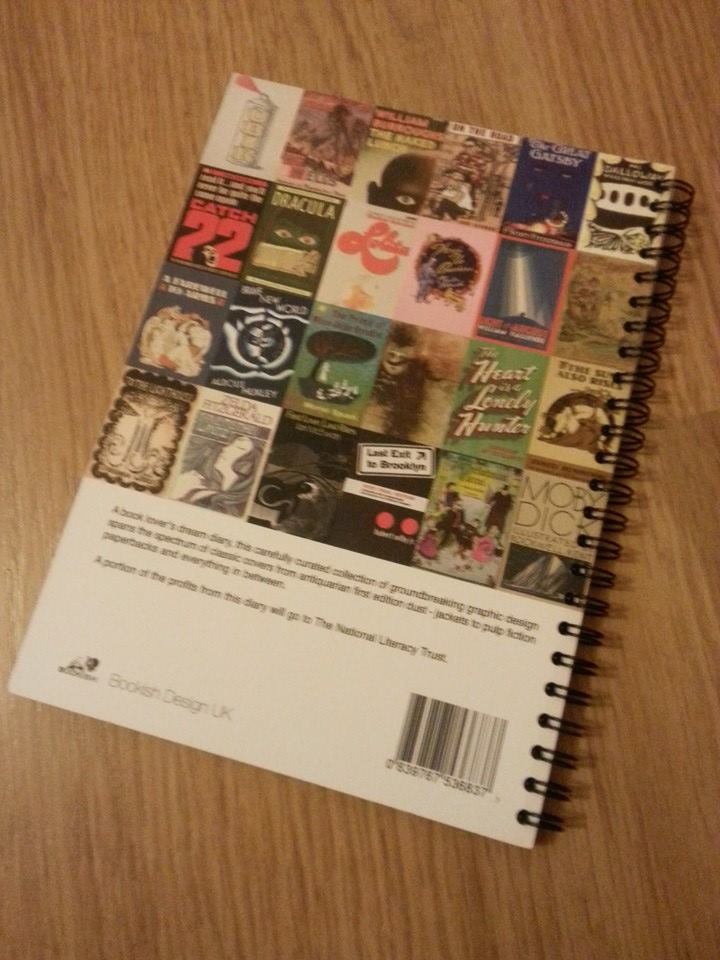
The diary design is by Bookish Design UK, and a portion of the profits from the diary go to The National Literacy Trust.

Diary2014a Diary2014b

The blurb… A book lover’s dream diary, this carefully curated collection of groundbreaking graphic design spans the spectrum of classic covers from antiquarian first edition dust-jackets to pulp fiction paperbacks and everything in between.

Do you have a diary to help you plan your goals?

Alittlebirdtweets is on Facebook! Here I post quotes, news and photo’s!

©2014.alittlebirdtweets

Tagged , , , , , , , , , , , , , , , , , , , , , ,

What made me become a writer?

The writing seed was planted inside me one rainy Sunday in 2004, while I was relaxing and reading in my ridiculously-small-rented-room in South-East London. I had been browsing the book section of a Croydon charity shop the day before, and had been instantly grabbed by a beautifully dreary front cover, and a sinister title. The book was called ‘Beneath the Skin’ by Nicci French. I had read the premise, test-read a random page (as I always do after plucking a book from the shelf), and had carried it straight to the till.

That Sunday afternoon I had downed numerous cups of tea – the heat of the liquid had fused with the irresistible chill that the pages were breathing into me. I turned page, after page, after page, until I reached the end. My instant thought upon closing the cover was ‘I wish I had written this book.’ Actually, I might have even whispered it aloud into those four walls.

I had fallen asleep that night with the book, the characters whirling around in my mind. The fear, darkness, reality, and loneliness that the book had aroused in me, had had even more effect in the darkness of the night, under the glow of the moon. I knew I would never forget this book. It had created an itch in my heart.

The following day I had been at work. I had clicked Google in my lunch hour. And in the search bar I clicked ‘How to write a novel’.

My obsession had begun.

©2014.alittlebirdtweets

– – – –

An excerpt from Goodreads;

“When she laughs, she makes a pealing sound, like a doorbell. If I told her I loved her, she would laugh at me like that. She would think I was not serious. That is what women do. They turn what is serious and big into a small thing, a joke. Love is not a joke. It is a matter of life and death. One day, soon, she will understand that.”

578564(2)

Tagged , , , , , , , , , , , , , , ,

My 2014 reading list

Hello Readers!

Here is a list of books that I plan to read in 2014.

There is a mix of Inspirational, educational, non-fiction and fiction books in the list, as I like to mix it up!

What do you plan to read this year?

The Power of Now – A Guide to Spiritual Enlightenment – by Eckhart Tolle

The God Species – How the planet can survive the age of humans – by Mark Lynas

The Marshall Plan for Getting Your Novel Published – by Evan Marshall

The Writer’s Digest Handbook of Novel Writing – by Tom Clark

Beautiful – by Katie Piper

Trafficked – by Sophie Hayes

The Wild Life – by John Lewis-Stempel

Innocence – by Dean Koontz

The Tiger in the Smoke – by Margery Allingham

Die for You – by Lisa Unger

Black Out – by Lisa Unger

Man and Boy – by Tony Parsons

Death on the Nile – by Agatha Christie

The People Next Door – by Christopher Ransom

Everything’s Eventual – by Stephen King

Never Knowing – by Chevy Stevens

The Double Bind – by Chris Bohjalian

Revolutionary Road – by Richard Yates

Never Tell – by Claire Seeber

Blueeyedboy – by Joanne Harris

The Scold’s Bride – by Minette Walters

The Fifth Victim – by Beverly Barton

The Book of Tomorrow – by Cecelia Ahern

Songbird – by Josephine Cox

A Streetcar Named Desire – by Tennessee Williams

The Cloning of Joanna May – by Fay Weldon

The Year of Magical Thinking – by Joan Didion

Utterly Monkey – by Nick Laird

A Kind of Intimacy – by Jenn Ashworth

All Fur Coat – by Andrew Homes

The Host – by Stephanie Meyer

West End Girls – by Barbara Tate

Call The Midwife – by Jennifer Worth

Northanger Abbey – by Jane Austen

Northanger Abbey Study Notes and Exercises on the novel – Rare Pamphlet published 1968

Jo Nesbo The Harry Hole Collection;

The Bat (The First Harry Hole Case)

Cockroaches 1998 (An Early Harry Hole Case)

The Redbreast (Oslo Sequence 1)

Nemesis (Oslo Sequence 2)

The Devil’s Star (Oslo Sequence 3)

The Redeemer (Oslo Sequence 4)

The Snowman (Oslo Sequence 5)

The Leopard (Oslo Sequence 6)

Phantom (Oslo Sequence 7)

Police (Oslo Sequence 8)

Headhunters – Other

Vintage Collection of stories by Robert Louis Stevenson, including;

The Strange Case of Dr. Jekyll and Mr. Hyde

The Body Snatcher

A Lodging for the Night

Markheim

Thrawn Janet

The Misadventures of John Nicholson

©2014.alittlebirdtweets

Tagged , , , , , , , , , , , , ,
Bitter Blessing

Living in Joy: Words of Hope from a Fellow Struggler

amiviku

Analyse own life

Melody Chen

Word-Experimentalist

Be Inspired..!!

Listen to your inner self..it has all the answers..

HEALTH | INSPIRATION

Mind • Body • Life

The Eternal Words

An opinionated girl penning down her thoughts.🌸❤

WindWhisperer

AUTHOR OF EPIC FANTASY FICTION ©WindWhisperer - MATURE CONTENT/ADULT CONTENT

Bombay Ficus

Running, Writing, Real Life Experiences & Relatable Content.

Poetry & Stories

From soul to soul

itsthebiblophile

Writing can be anything for anyone but for me it's to express the overwhelming feelings I feel that cannot be said .[Disclaimer : everything posted here will be my own work (p.s. work here means everything written and not the images) unless mentioned otherwise. Please do not copy.]

Avem

Live life of your choice

D_VYANG_TALKS

Spontaneous Blogger! Doze on Sunday @7 PM IST

WORDSNOW HEART

It is all about words. Your words are enough to shatter someone's heart. Your words are enough to make a broken heart unbroken. Words have the power to change your life perspectives.

From The Quill

Aren't songs of grief lullabies to the lost?

Looking Write Back at You

Following a Dream to Become an Author

My Serene Words

seeking solace in the horizon of life and beyond

Lucien Writes

Lucien May is an English author who writes stuff down then says, ‘Wow. That’s great.’

Mystorious Stories

Creative writing and freelance services

Brunel Writer

Creative Writing at Brunel University London

night whispers

the semi-poetic ramblings of an early-twenties mind

YonnieInHisCare

Sharing the Gift of Life through Poetry, Stories, Testimonials, and Creative Writing.

Rose Girl's World

Poetic Art From The Heart ~ Finding Beauty In Truth

A.P. Bastian

infusing poetry into the mundane

Jessica M. Collette

Fictional Sentiments Inspired by Life

I have nothing to watch

Film reviews and recommendations

A Damn Fine Cup of Culture

Pop culture musings

Consequence

Music, Film, TV and Pop Culture News for the Mainstream and Underground

In Their Own League

Diverse Voices, Powerful Stories

Deadline

Hollywood Entertainment Breaking News

Bloody Disgusting!

Horror movie news, reviews, interviews, videos, podcasts and more

the ghost of 82

GREETINGS, PROGRAMS!

Sue Spitulnik

Writing, Sewing, Travel, and Thoughts